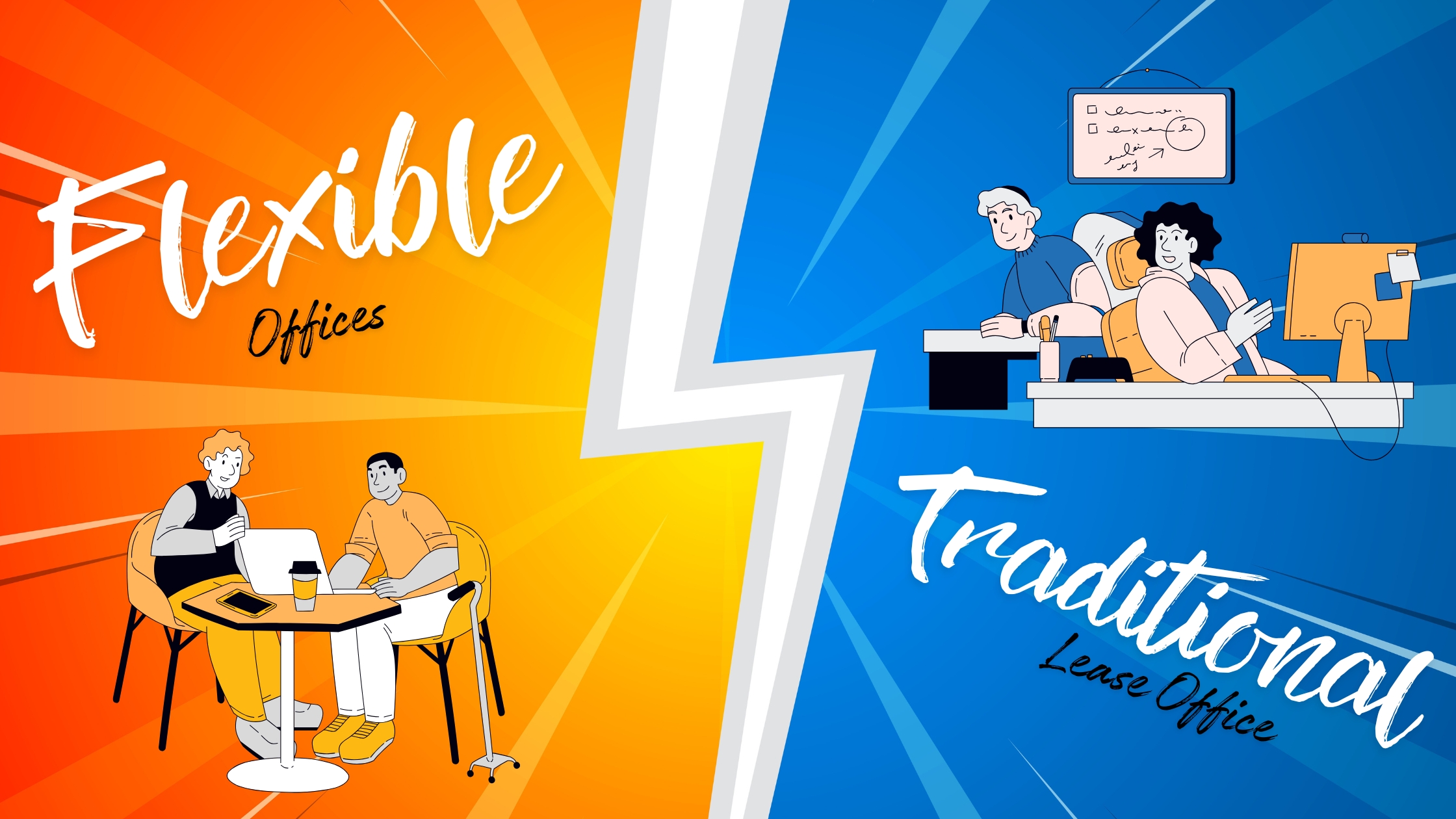
Flexible Offices vs Traditional Leases: What Saves More Money?
Choosing the right office space is one of the biggest financial decisions for any business. Whether you're a startup, freelancer, or growing company.
Let’s break it down in simple terms.
What is a Traditional Office Lease?
A traditional office lease is a long-term rental agreement (usually 3–9 years) where you rent an empty office space and manage everything yourself.
Costs Involved:
Security deposit (3–6 months upfront)
Monthly rent
Interior setup & furniture
Electricity & maintenance
Internet & IT setup
Office staff (reception, housekeeping)
Property tax & legal fees
Hidden Expenses:
Lock-in period penalties
Repair & maintenance costs
Renovation expenses
Utility fluctuations
While it gives full control, the upfront investment is very high.
What is a Flexible Office (Coworking Space)?
Flexible offices are ready-to-use workspaces with short-term commitments. You pay for what you use.
Costs Involved:
Low security deposit
All-inclusive monthly fee
No setup cost
Utilities included
Internet included
Reception & housekeeping included
Advantages:
No long-term lock-in
Fully furnished cabins & open desks
Meeting rooms on demand
Easy upgrades or downsizing
It’s a plug-and-play solution.
Cost Comparison (Simple Example)
Let’s compare for a small 10-member team in India:
Result: Flexible offices save massive upfront capital.
When Traditional Lease Makes Sense
A traditional lease may work better if:
You are a large company (100+ employees)
You want complete branding customization
You plan to stay in one location for 5+ years
You have high upfront capital available
When Flexible Offices Save More Money
Flexible workspaces are ideal if:
You are a startup or SME
You want low risk & low investment
Your team size may grow or shrink
You want to focus on business, not office management
You prefer predictable monthly costs
For growing businesses, flexibility = financial safety.
The Hidden Benefit: Opportunity Cost
Instead of spending ₹10–15 lakhs on interiors, imagine investing that money in:
Marketing
Hiring talent
Technology
Product development
Flexible offices allow you to keep capital free for growth.
Final Verdict: Which Saves More?
If you calculate total upfront cost + hidden expenses + risk factor, flexible offices clearly save more money for:
Startups
Freelancers
Growing Businesses
Remote Teams
Traditional leases are more suitable for stable, large-scale enterprises.
Why Businesses Are Switching to Flexible Offices
Post-pandemic, companies prefer agility over ownership. Businesses now want:
Scalability
Lower commitment
Managed infrastructure
Cost efficiency
Flexible workspaces deliver all of that.
Looking for a Cost-Effective Office?
At G Connect Spaces, we provide:
Private cabins
Open workstations
Meeting rooms
Fully managed office spaces
Economical pricing plans
Start small. Scale fast. Save more.

_11zon.jpg)